Grok Trading Strategy Tested on TradingView: Backtests, Optimizations & Real Results
Tested Grok AI trading strategy on TradingView for Bitcoin & ETH. See initial backtests, optimizations, and forward testing tips.
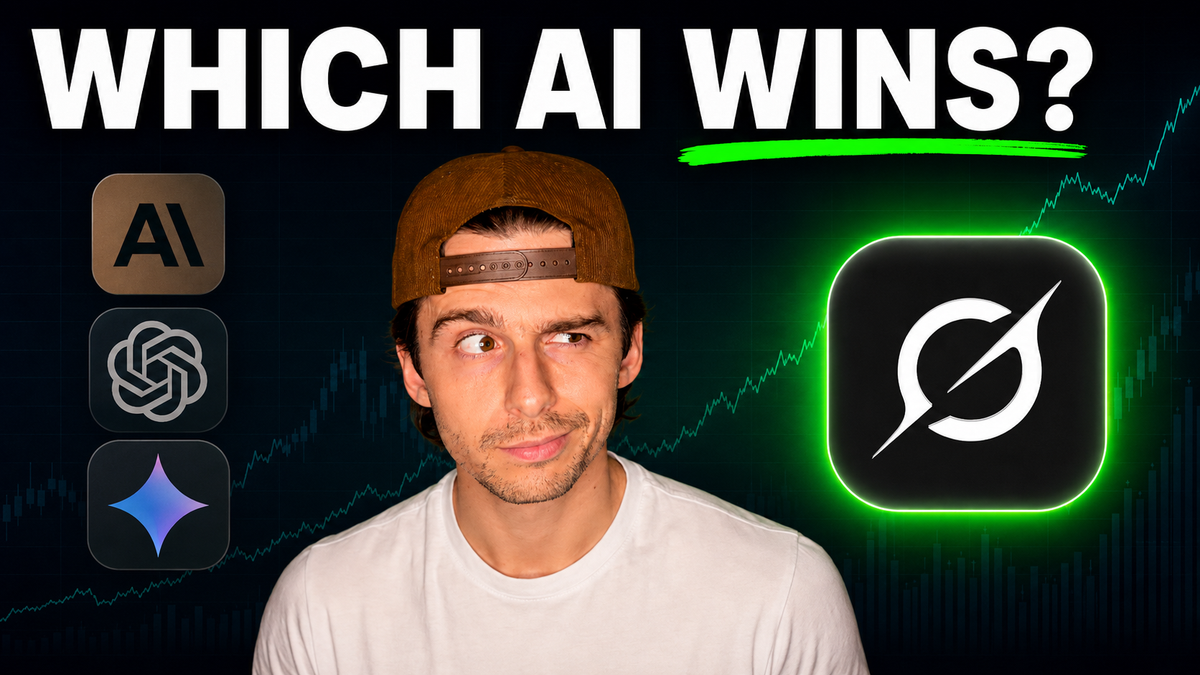
I prompted Grok to build a complete trading strategy I could actually use on Bitcoin, Ethereum, Solana, SPY, and QQQ. After one minor code tweak, I received a clean 78-line Pine Script for the TradingView Pine Editor. Initial backtests looked solid — 64% returns on ETH with just 5% max drawdown — but the bulk of gains came from 2017, and recent years were mostly sideways.
In this guide, I share the exact optimization process (changing one parameter at a time), the dramatic improvements I achieved, the best-performing setups on different assets and timeframes, and critical warnings about backtesting pitfalls. If you want a practical Grok trading strategy you can test and potentially profit from, this walkthrough shows exactly what worked — and what to watch out for.
Grok Trading Strategy Tested on TradingView: Backtests, Optimizations & Real Results
I prompted Grok to build a complete trading strategy I could actually use on Bitcoin, Ethereum, Solana, SPY, and QQQ. After one minor code tweak, I received a clean 78-line Pine Script for the TradingView Pine Editor. Initial backtests looked solid — 64% returns on ETH with just 5% max drawdown — but the bulk of gains came from 2017, and recent years were mostly sideways.
In this guide, I share the exact optimization process (changing one parameter at a time), the dramatic improvements I achieved, the best-performing setups on different assets and timeframes, and critical warnings about backtesting pitfalls. If you want a practical Grok trading strategy you can test and potentially profit from, this walkthrough shows exactly what worked — and what to watch out for.
Table of Contents
- Prerequisites / What You’ll Need
- How I Prompted Grok for a Trading Strategy
- Initial Backtest Results Across Assets and Timeframes
- Strategy Optimization Process: One Parameter at a Time
- Best Performing Setups and Results
- Important Backtesting Warnings and Limitations
- How to Forward Test the Strategy Safely
- Frequently Asked Questions
Key Takeaways
- Grok successfully generated a functional 78-line Pine Script trend-following strategy using EMA and ADX filters.
- Initial results were decent but heavily front-loaded in strong bull markets like 2017; recent choppy periods showed flat-to-modest gains.
- Optimizing the EMA trend filter length (to 150) and ADX threshold (to 15–20) significantly boosted returns while keeping drawdowns manageable.
- Top setups delivered 656% on ETH (2-hour or 4-hour) with 14% max drawdown and over 1,100% on BTC (1-hour) with ~1,000 trades.
- Always forward test with alerts and paper trading before going live — backtests can hide repainting and curve-fitting risks.
Prerequisites / What You’ll Need
To follow this exact process and test or optimize your own Grok trading strategy, you’ll need:
- A free or Premium TradingView account (Premium unlocks more historical data and backtesting features).
- Access to the Pine Editor (built into every TradingView chart).
- Basic familiarity with adding strategies to charts and running backtests (no advanced coding required).
- 30–60 minutes to run multiple backtests across timeframes and assets.
- Patience to optimize one parameter at a time — this is the key to understanding what actually moves the needle.
No paid tools or programming experience beyond copy-pasting the Pine Script are required.
How I Prompted Grok for a Trading Strategy
I asked Grok to create a versatile strategy suitable for Bitcoin, Ethereum, Solana, SPY, and QQQ that I could apply across different timeframes. After a small initial error (quickly fixed by feeding the issue back to Grok), it delivered a clean 78-line Pine Script strategy.
The strategy is trend-following in nature. It uses an EMA-based trend filter to determine overall market direction and an ADX filter to confirm trend strength before entering trades. Default settings started with a 200-period EMA and 25 ADX threshold. I pasted the code directly into TradingView’s Pine Editor and began backtesting immediately.
Initial Backtest Results Across Assets and Timeframes
The first runs looked promising on paper:
- Ethereum (ETH) on 4-hour and 1-hour charts: ~64% total return, 5% max drawdown, 46% win rate, 4.313 profit factor. The majority of profits came from one or two large 2017 trades.
- Bitcoin (BTC) showed stronger consistency over longer periods, especially on 4-hour charts.
- Solana (SOL) and stock indices (SPY/QQQ) produced weaker, less reliable results.
Across the board, the strategy performed well in strong trending environments but struggled in the choppier markets of recent years. It wasn’t losing money — it was simply not capturing enough new opportunities. This is exactly why optimization became the next step.
Strategy Optimization Process: One Parameter at a Time
I followed the golden rule of optimization: change only one setting at a time and re-test thoroughly. This prevents confusion about which change actually improved (or hurt) performance.
Tweaking the EMA Trend Filter Length
Original setting: 200-period EMA.
Grok recommended loosening the trend filter for more entries in recent years.
- Changed to 150 → Best equity curve. Returns improved modestly, profitable trades increased, and the slope looked cleaner through 2023.
- Changed to 100 → More trades (73 total) but lower win rate and profit factor.
- Changed to 50 → Even more data points but noticeably less efficient per trade.
I settled on 150 as the sweet spot — more activity without excessive whipsaws.
Adjusting the ADX Trend Strength Threshold
Original setting: 25.
Lowering this allowed the strategy to enter during slightly weaker (but still valid) trends.
- Changed to 20 → Dramatic improvement to ~89% return with similar drawdown and nearly double the trade count.
- Changed to 15 → ~130% return, ~10% max drawdown, more consistent grinding between big wins.
- Changed to 10 → Further gains with a very clean equity curve.
Final optimized settings I liked most: EMA 150 + ADX 15–20. These changes unlocked significantly better performance without exploding risk.
Best Performing Setups and Results
After optimization, several configurations stood out:
- Bitcoin 1-hour: Over 1,100% return with ~1,000 trades. Higher drawdown (~16%) but excellent sample size. Performed best in trending environments.
- Ethereum 4-hour / 2-hour: 656% return, 14% max drawdown, 437 trades. This was my favorite equity curve — steady upward slope over 10 years with fewer massive gaps.
- Bitcoin 4-hour: Solid balance of returns and trade frequency (swing-trading style, roughly 2 trades per month).
The optimized Grok trading strategy turned a decent starter into a much more robust performer. Total trades over ~10 years ranged from 60–1,000 depending on timeframe, giving a healthy sample size for a swing approach.
Important Backtesting Warnings and Limitations
Backtesting looks amazing in hindsight, but real trading is different. Key caveats I noted:
- Heavy reliance on 2017-style moves in some tests — future markets may not repeat those exact conditions.
- Repainting risk: Some signals may appear mid-bar in the backtester but only confirm at close in live trading.
- Curve fitting / over-optimization: Tweaking too aggressively can create a strategy that only works on past data.
- Recent choppy years showed the strategy protected capital well but didn’t generate big new highs.
Pro tips to reduce these issues:
- Turn on Bar Magnifier in TradingView.
- Go to strategy properties → check Recalculate on every tick.
- Always compare live forward tests against historical results.
How to Forward Test the Strategy Safely
Before risking real capital, forward test the Grok trading strategy:
- Add the strategy to your chart.
- Click the three dots → Add Alert.
- Create alerts for long entries, short entries, exits, etc.
- Paper trade every alert in real time (or use a small position size).
- After 5–30 days, refresh the backtest and compare live fills vs. historical performance.
- For faster testing of multiple strategies, consider automation (full tutorial available in many TradingView community resources).
This step quickly reveals repainting, slippage, or emotional execution issues that backtests hide.
Frequently Asked Questions
Is the Grok trading strategy profitable?
It showed strong historical profitability after optimization (up to 1,100% on BTC 1H and 656% on ETH), but past performance does not guarantee future results. Forward testing is essential.
Which asset and timeframe performed best?
Ethereum on the 2-hour or 4-hour timeframe delivered the cleanest equity curve with solid returns and manageable drawdown. Bitcoin on 1-hour offered the highest returns but with more volatility.
What parameters should I optimize first?
Start with the EMA trend filter length (try 150) and ADX threshold (try 15–20). Always change one at a time and re-run full backtests.
Does this strategy beat buy-and-hold?
In the optimized versions it outperformed in total return on the tested crypto pairs, but results vary by asset and period. It shines more in trending markets.
Can I use this Grok trading strategy on stocks like SPY or QQQ?
It can be applied, but initial tests showed weaker results compared to crypto. Treat stocks as experimental and optimize separately.
How do I avoid repainting and curve fitting?
Use bar magnifier, recalculate on every tick, optimize conservatively, and always forward test with live alerts.
How many trades does the strategy generate?
Swing-style: roughly 2 trades per month on 4-hour charts (60–200 trades over 10 years). Higher-frequency timeframes like 1-hour produce far more trades.
Is Grok good at generating trading code now?
Yes — after one quick correction it produced clean, usable Pine Script. Ongoing improvements mentioned by Elon Musk suggest even better results ahead.
Should beginners try this Grok trading strategy?
With paper trading and proper forward testing, yes. Start small, understand the logic, and never risk money you can’t afford to lose.
Ready to Build and Optimize Your Own Grok Trading Strategy?
Grok proved it can generate a legitimate starting point for a TradingView trading strategy. With thoughtful one-at-a-time optimization of the EMA trend filter and ADX threshold, I turned a good backtest into something far more robust across Bitcoin and Ethereum.
The next step is yours: copy the process, prompt Grok yourself, run the same tests, and forward test rigorously before going live. Markets evolve, so treat every strategy as a work in progress.
Drop your own Grok trading strategy results or questions in the comments — I’ll be continuing to optimize and forward test this one myself. Let’s see how it performs in real time.