How to Copy Congress's Stock Trades with AI for Free
Track and copy Congress stock trades free with an AI-powered tracker on AlphaInsider — see PTR filings, get trade alerts, and auto trade them.

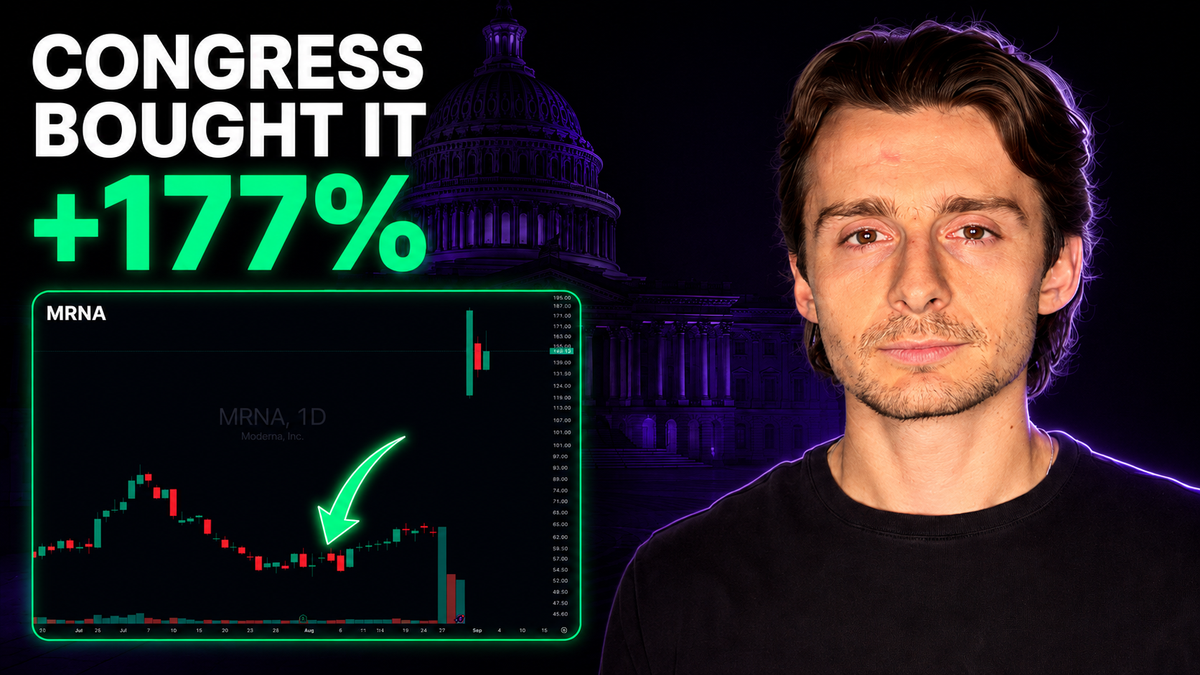
A member of Congress's stock portfolio just went nuclear — up 230% on the year after Moderna (MRNA) announced positive Phase 3 cancer vaccine news. Moves like that raise an obvious question: if politicians might be trading on information the rest of us don't have, is there a way to copy Congress stock trades instead of watching from the sidelines?
Yes — and it's free. The Congress tracker built on AlphaInsider uses an AI workflow to read every congressional trading disclosure the moment it's filed, mirror it into a live portfolio, and let anyone view, copy, or even auto-trade those portfolios with their own broker.
In this article, we'll break down the Moderna trade that sparked the conversation, how congressional stock disclosures actually work (including their frustrating delays), how the AI workflow turns paper filings into tradeable portfolios, and the exact steps to start copying the members of Congress you choose.
Table of Contents
- Key Takeaways
- The Moderna Trade That Went Nuclear
- Should Members of Congress Be Trading Stocks?
- How Congressional Stock Disclosures Work
- The AI Workflow That Turns Filings Into Portfolios
- How to Copy Congress Trades Step by Step
- What It Costs (Spoiler: Nothing)
- Frequently Asked Questions
- Conclusion
Key Takeaways
- Members of Congress must disclose their stock trades in PTR filings, but they get up to 45 days to do it — and annual reports can be delayed even further with extensions.
- An AI-powered n8n workflow reads each new filing the moment it lands, figures out what was traded, and rebalances that member's portfolio on AlphaInsider to match their reported holdings.
- Everyone can see the portfolios for free, copy them for free, and automate one portfolio for free — there's no paywall on the data.
- Trade alerts notify you of every new trade or rebalance, so you can follow along manually or let auto-trading handle it.
- Auto-trading connects through Alpaca for stocks, with a paper-trading option if you want to test before committing real money.
- You can blend up to 100 portfolios into one — for example, a 70-10-20 split across three members of Congress, or a mix of Congress trackers and regular trading strategies.
- Portfolios can show more than 100% allocation because AlphaInsider supports up to 2x leverage.
The Moderna Trade That Went Nuclear
The trigger for all of this: the tracked stock portfolio of Representative Jasmine Crockett of Texas is now up 230% on the year, and Moderna is the reason why.
As of the close on Tuesday, August 18th, Moderna (MRNA) traded around $62–63 per share. The next day, the company announced positive Phase 3 cancer vaccine news, and the stock jumped well over 100% — and it's actually holding those gains, up another 17% on the day this story was recorded.
To be fair, the jump itself makes sense. This is obviously big news for Moderna, and potentially much bigger news for the entire world. Crockett also isn't a particularly active trader — but Moderna was in her portfolio when the news hit.
Should Members of Congress Be Trading Stocks?
Moves like this always resurface the same two questions:
- Should members of Congress be able to trade stocks at all?
- Do they have information the rest of us don't?
There's a substantial argument to be made that they do. But rather than just debating it, there's a more practical question: what can we actually do about it?
That's the entire purpose of the Congress tracker built on AlphaInsider — to take the disclosure reports Congress is legally required to file and turn them into something the public can actually use.
How Congressional Stock Disclosures Work
Members of Congress are required to disclose their trading activity through two main report types. Understanding both — and their limitations — explains why an automated tracker is so useful.
PTR Reports: Disclosing Every Transaction
Every time a member of Congress makes transactions in the stock market, they must file a PTR REPORT disclosing them. These filings are public — you can look them up on the House financial disclosures site, search by name, pull up filing years, and open the actual reports.
Each report shows:
- The transaction type (purchase or sale)
- What was traded
- A dollar range for the position — not an exact amount
Those ranges are broad. One transaction might be reported as $1,000–$15,000; another as $50,000–$100,000. It's imprecise, but at least it reveals that purchases or sales of individual stocks happened — which means they can be monitored.
Activity levels vary wildly by member. Crockett files relatively little, while a member like Brian Babin shows far more trading activity this year alone.
The Annual Financial Disclosure Report
On top of PTRs, every member must file an annual financial disclosure report (FDR) — the report that reveals what assets they actually hold.
Crockett's own FDR is a good example of how slow this process can be:
| Event | Date |
|---|---|
| Original filing deadline for the 2025 report | May 15 |
| Filed a 90-day extension | April 1, 2026 |
| New deadline after extension | August 13 |
| Actually filed | August 12 — one day before the extended deadline |
That's a report on 2025 holdings arriving many months after the year ended.
The Disclosure Delay Problem
Here's the catch with all of this: members currently have 45 days to disclose a transaction. Each filing shows both a transaction date and a notification date, and the gap between them is essentially up to the discretion of the person filing. Some members file promptly; others wait the full window, file extensions, or even accept the penalty for filing late.
So there's no guarantee of tracking a position the second it's entered. If a member sits on a filing, their next report may not arrive for weeks or months after the trades were made. That's unfortunately just how the system works — which makes it even more important to act on filings the instant they do appear.
The AI Workflow That Turns Filings Into Portfolios
This is where AI changes the game. The tracker runs on an AI-powered n8n workflow — publicly disclosed, so you can see exactly how it works — that springs into action every time a new PTR report is filed:
- Scan the filing immediately. The AI reads the PTR report the moment it lands.
- Extract the transactions. It figures out exactly what was bought or sold.
- Update the member's portfolio on AlphaInsider. It determines what to adjust and how to rebalance so the portfolio best matches everything that member has reported — both PTR filings and the annual report.
The workflow was built this year, which explains one quirk in the data: on June 16th, a major update to how the workflow runs made it look like Crockett placed a big transaction. In reality, that was a restructuring rebalance — the system determining her positions and structuring the portfolio to best match her filed reports.
Two more things worth understanding when you're reading these portfolios:
- Small adjustments aren't new trades. The portfolio automatically rebalances based on the weights of its different positions, so minor movements are just the system keeping the allocation true to the member's reported holdings.
- Portfolios can be over 100% full. AlphaInsider supports up to 2x leverage, which is why the allocation dial on a portfolio can read beyond 100%.
The result: every time new trades come in, you see them — without reading a single government PDF yourself.
Want to see what Congress is trading?
Create a free account and follow any member's portfolio — no paywall on the data.
How to Copy Congress Trades Step by Step
Here's the full process, from a free account to a diversified, auto-traded portfolio of congressional holdings:
- Create a free account. From the homepage, go to Top AI Agent Strategies and you'll find the Congress Tracker.
- Browse and subscribe. Sort through essentially any member of Congress, check out their portfolios, and subscribe to your favorites.
- Turn on trade alerts. Click Trade Alerts at the top right of a portfolio. Every time there's a trade or rebalance, you'll be notified — you can then take those trades yourself or adjust your own portfolio to match. This works for any trading strategy on the site, not just Congress portfolios.
- Set up auto-trading. On a member you've subscribed to — say, Andy Harris — click Auto Trade. For stocks, Alpaca is the best broker option: connect an Alpaca paper account if you want to test things out first, or hit New Broker Connection and enter your Alpaca details to go live.
- Set your allocations. Now decide how much of your portfolio each member gets. For example: 20% to Andy Harris, 10% to Jasmine Crockett, and 70% to Nancy Pelosi — a 70-10-20 split across three members who all trade different stocks, combined into your own mega portfolio.
- Mix and rebalance as you like. You're not limited to Congress. Pull in any strategy on the platform — say a strategy you built yourself at 40%, dropping Pelosi to 30% — and diversify across up to 100 different strategies or portfolios.
Not every Congress portfolio is a high-flyer, either. The Joseph Morelle portfolio, for example, is far less volatile — steady gains built on ETFs and safer assets. Part of the value of the tracker is finding the trading style that actually fits you.
What It Costs (Spoiler: Nothing)
Plenty of services charge for congressional trading data. This one doesn't:
- Free account — access to everything on the site.
- View every Congress portfolio for free.
- Copy any portfolio for free using trade alerts.
- Automate one portfolio or trading strategy for free with your own broker.
There's no paywall between you and the data. If you find a member worth following, you can act on it the same day.
Frequently Asked Questions
What is a PTR report?
A PTR is the disclosure report members of Congress must file every time they make transactions in the stock market. It shows the transaction type, what was traded, and a broad dollar range for the position — for example, $1,000–$15,000 or $50,000–$100,000.
How quickly must members of Congress disclose their trades?
They currently have up to 45 days from the transaction to file the disclosure. Each filing shows both the transaction date and the notification date, so you can see exactly how long each member waited.
What is the annual financial disclosure report?
The FDR is the yearly report revealing what assets a member holds. It can lag badly: Jasmine Crockett's report for 2025 was originally due May 15, extended 90 days to August 13, and filed on August 12 — one day before the extended deadline.
Why do congressional trades show up late?
The timing is largely up to the person filing. Members can use the full 45-day window, file extensions, or even accept a penalty for late filing — meaning some trades aren't public until weeks or months after they happened.
Is the Congress tracker really free?
Yes. A free account gets you access to every portfolio, free copying via trade alerts, and even free automation of one portfolio or strategy through your own broker.
Which broker is used for auto-trading?
For stocks, Alpaca is the best option. You can connect an Alpaca paper account to test the system without real money, or create a live broker connection when you're ready.
Why can a portfolio show more than 100% allocation?
AlphaInsider supports up to 2x leverage, so a portfolio's allocation dial can legitimately read above 100%.
Do small portfolio adjustments mean the member made new trades?
Not necessarily. Portfolios automatically rebalance based on position weights to stay matched to the member's reported holdings, so small adjustments are usually just rebalancing — not fresh transactions.
Can I copy more than one member of Congress?
Yes — you can allocate your portfolio across multiple members (like a 70-10-20 split across three of them) and combine up to 100 different strategies or portfolios, including non-Congress trading strategies.
Conclusion
Congressional trading isn't going away, and the disclosure system — with its 45-day windows and multi-month extensions — isn't getting faster on its own. But AI has genuinely changed what's possible: the moment a filing appears, an automated workflow can now read it, decode it, and mirror it into a portfolio anyone can copy Congress stock trades from — for free.
So you don't have to sit on the sidelines watching a portfolio rocket 230% and wonder what that would have meant for you. Create your free AlphaInsider account, open the Congress Tracker, subscribe to the members you want to watch, and decide for yourself whether to follow along with alerts or put your allocations on autopilot.